Introduction
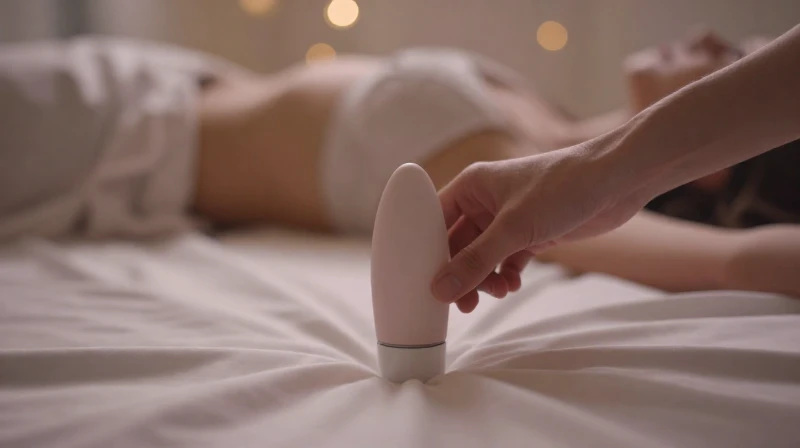
An oscillating vibrator is a pleasure device that combines traditional vibration with a mechanical, rhythmic movement—specifically a back-and-forth, spinning, or "wobbling" motion. While a standard vibrator primarily relies on high-frequency buzzing to stimulate nerves, an oscillator is designed to replicate the physical actions of manual stimulation, such as rubbing in circles, twisting, or sliding against the skin. The goal of an oscillator is to provide a more complex, dynamic sensation that mimics the way a hand or a partner might move a toy or a finger against the body.
For many people, standard vibration can feel one-dimensional or " buzzy" in a way that feels disconnected from the actual mechanics of pleasure. Oscillators aim to bridge that gap by adding a layer of kinetic movement. However, because every body responds differently to pressure and frequency, finding the specific type of oscillation that works for you requires understanding the difference between "pinpoint" sensations and "deep pressure" mechanics.
Understanding the Mechanics: Movement vs. Vibration
To understand why an oscillating vibrator feels different from a standard one, it helps to look at the physics of the device. Most handheld vibrators use a motor to create a rapid shaking motion. This is excellent for stimulating surface-level nerve endings quickly. Oscillators, however, incorporate a mechanism that creates a secondary motion path.
Think of it as the difference between a humming motor and a swinging pendulum. The oscillation provides:
- Manual Replication: It mimics the "twisting" of a bullet vibrator or the "circular rubbing" of a finger [1].
- Dynamic Friction: Because the toy is moving across the skin rather than just vibrating against it, it can create a different type of friction that feels more like a massage and less like a mechanical hum.
- Variable Coverage: The back-and-forth motion allows the toy to cover a slightly larger surface area of the clitoris or vulva, rather than focusing on one tiny point of contact.
The "Oscillating" Distinction
While the term "oscillator" is often used interchangeably with "vibrator" in casual conversation, the mechanical difference is significant. A true oscillator has a specific movement cycle. For example, some models are designed to spin in a circular motion, while others move in a linear "swaying" motion. This movement is intended to provide a "glide" that helps the toy feel more integrated with the body's anatomy.
The Sensory Experience: What to Expect
Sensation is subjective, and what one person describes as "thumping" might feel like "pulsing" to another. Because oscillating vibrators introduce movement, the sensations they produce are often described as more "active" than standard vibration.
Users often report three distinct sensations when using these types of devices:
- The "Glide": A smooth, sweeping feeling where the toy moves across the skin. This is often preferred by those who find standard vibrations too sharp or "stinging."
- The "Twist": A sensation that mimics the rotation of a finger or a smaller toy. This is particularly effective for those who enjoy the feeling of friction changing angles.
- The "Thump": A deeper, more rhythmic movement. Some oscillators produce a heavier "thump" rather than a high-frequency buzz, which can be more grounding and less "busy" for the nervous system.
Suction vs. Oscillation: A Note on Technology
It is also important to distinguish oscillation from suction (air-pulse) technology. While both are "non-traditional" vibrations, they work very differently. Suction uses air pressure to create a pulsing sensation that mimics the feeling of oral sex, whereas oscillation uses mechanical movement to mimic manual touch. Many people find that suction is not universally effective; some find it too intense or "hollow," while others find it provides the specific type of stimulation they were looking for [1].
Pressure vs. Pinpoint: Finding the Right Intensity

One of the most common hurdles in finding the right toy is the distinction between where you feel the sensation and how deep that sensation goes. This is a frequent point of confusion for people who feel like "nothing is happening" even when using high-powered toys.
There are generally two types of needs when it comes to pleasure:
Pinpoint Vibration
This is the "spark" sensation. It is high-frequency, very localized, and feels like it is happening right on the surface of the skin. Many standard "bullet" vibrators excel at this. If you enjoy a sharp, intense, immediate sensation, you might find that a traditional vibrator is actually more effective than an oscillator.
Deep Pressure
For some people, pinpoint vibration feels "diluted" or "surface-level." These users often require "deep, almost crushing pressure" to achieve peak pleasure [1]. For these individuals, a standard wand or a small oscillator may not be enough because the sensation doesn't feel like it is reaching the deeper tissues. This is where mechanical limitations come into play—some oscillators (such as the Zumio) may cease to move effectively or lose their "glide" when pressed firmly against the body, which can be a barrier for those seeking that deep, heavy pressure [1].
Comparing Sensation Profiles
To help identify what you might be looking for, it is useful to compare the different categories of toys and how they interact with the body.
| Type of Toy | Primary Mechanism | Best For... | Common Feedback |
|---|---|---|---|
| Standard Vibrator | High-frequency oscillation of a motor. | Quick, intense, pinpoint surface stimulation. | "Good for a fast build-up, but can feel 'buzzy' or 'thin' over time." |
| Oscillating Vibrator | Mechanical back-and-forth or spinning movement. | Replicating manual techniques like rubbing or twisting. | "Feels more like a massage; provides a more complex 'glide' sensation." |
| Suction / Air-Pulse | Rhythmic air pressure pulses. | Mimicking oral sensations without direct contact. | "Very unique; some love the 'thump,' while others find it lacks enough pressure." |
| Grinding Toys (e.g., Enby) | Large surface area/pressure-based design. | Those who need deep pressure and "heavy" stimulation. | "Better for those who find wands or small oscillators too 'surface level' [1]." |
Troubleshooting Your Sensation
If you have purchased an oscillating vibrator and it doesn't feel like the "magic bullet" you expected, it is rarely a matter of your body being "difficult." Instead, it is usually a mismatch between the toy's mechanics and your specific sensory needs. When troubleshooting, ask yourself these three questions:
- Is it too "thin"? If the sensation feels like it's only happening on the very top layer of skin, you may need a toy that offers more pressure. This might mean a larger wand, a heavier device, or a grinding-style toy [1].
- Is there enough "movement"? If the toy feels like it's just vibrating in one spot, the oscillation might be too subtle. You may need a device with a more aggressive mechanical movement or a different "path" (e.g., switching from a spinning motion to a linear back-and-forth motion).
- Is it too "busy"? Sometimes, the combination of vibration and oscillation can be overwhelming for the nervous system. If the sensation feels chaotic, try a lower frequency and see if the mechanical movement alone provides the pleasure you're looking for.
Common Questions About Vibrators and Pleasure
What are love eggs?
Love eggs are a category of wearable vibrators, typically designed to be inserted internally or worn against the body. They are often used for "hands-free" pleasure or for long-term wear. Unlike oscillators, which are usually held in the hand to provide active movement, love eggs are generally designed for consistent, steady stimulation.
Why do vibrations feel so good down there?
The clitoris and surrounding vulvar tissues are densely packed with nerve endings. Vibration stimulates these nerves by creating rapid mechanical movement, which triggers the release of endorphins and dopamine. Because the nerves are so concentrated, even small amounts of movement can be perceived as intense pleasure. Oscillators take this a step further by engaging larger muscle groups and deeper tissues through their back-and-forth motion.
Will a vibrator get flagged at the airport?
In most countries, including the United States, vibrators are perfectly legal to transport. However, they are often categorized as "adult products." While they are generally not "flagged" in a way that leads to legal trouble, it is always a good idea to keep them in your carry-on bag in a discreet pouch. If a security officer asks what the item is, being honest that it is a personal wellness device is usually sufficient. Always check the specific customs regulations of your destination country if traveling internationally.
Synthesis: Choosing the Right Tool
The best tool for pleasure is the one that matches your specific sensory "map." If you crave the sensation of a hand rubbing or twisting, an oscillating vibrator is a logical choice because it automates those manual movements. However, if you find that your primary need is depth, you may need to look beyond oscillation and toward toys that prioritize heavy pressure or larger surface areas.
When trying a new toy, give it at least 10–15 minutes of exploration. Start with low intensity to map out the movement, then gradually increase the pressure or speed. If you consistently find that oscillating toys feel "surface level" or "diluted," it is a signal to explore different categories of toys—such as heavy-duty wands or grinding devices—that provide the deeper, more crushing pressure some bodies require to reach climax [1].
This article provides educational information and is not a substitute for professional medical advice, diagnosis, or treatment.
Sources
- Oscillating vibrators? I need deep pressure, and pinpoint vibrations. : r/TwoXSex — reddit.com
Frequently Asked Questions
What are love eggs?
Love eggs are wearable vibrators typically designed to be inserted internally or worn against the body for hands-free pleasure or long-term wear. Unlike oscillators, they are generally designed to provide consistent, steady stimulation.
What is the Oscillator vibrator?
An oscillating vibrator is a pleasure device that combines traditional vibration with mechanical, rhythmic movements such as spinning, wobbling, or back-and-forth motions. These movements aim to replicate manual stimulation techniques like rubbing in circles, twisting, or sliding against the skin.
Why do vibrations feel so good down there?
The clitoris and surrounding vulvar tissues are densely packed with nerve endings that are stimulated by the rapid mechanical movement of vibrations. This stimulation triggers the release of endorphins and dopamine, which are perceived as intense pleasure.
Will a vibrator get flagged at the airport?
Vibrators are perfectly legal to transport in most countries, including the United States, and are generally not flagged in a way that leads to legal trouble. It is recommended to keep them in a discreet pouch in your carry-on bag and be honest if a security officer asks about the item.
Related Articles